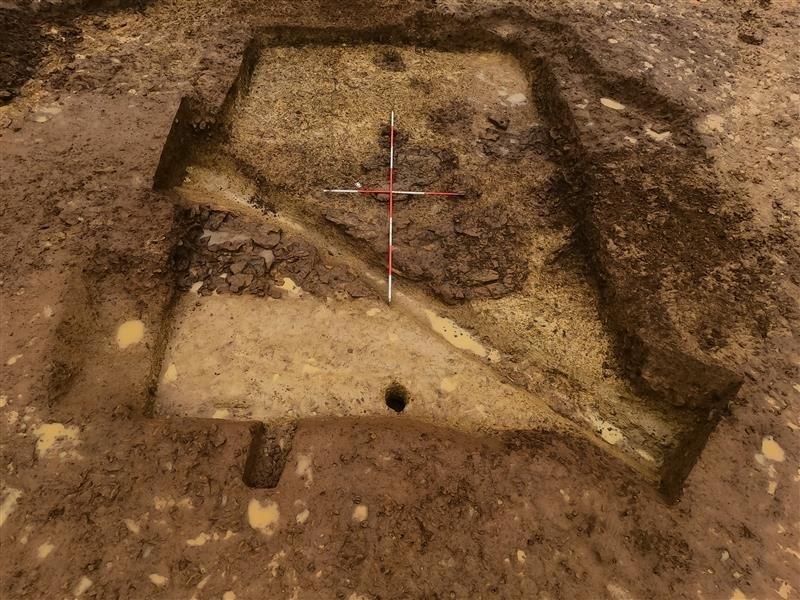
We’ve been excavating at Banbury on behalf of David Wilson Holmes. Over the summer we’ve been sharing some of our finds on social media, dating from prehistory to the post-medieval period. In our first site blog, explore the evidence we’ve uncovered which connects our site to a nearby battle in the English Civil War.
Banbury and the English Civil War
In 1642 England descended into civil war during the struggling reign of King Charles I. On one side were the supporters of Parliament (the parliamentarians) on the other the royalists (supporters of the king). The town of Banbury was in support of Parliament, but two months into the civil war – and just three days after the first large battle – they surrendered to the king and royalist soldiers captured the castle.
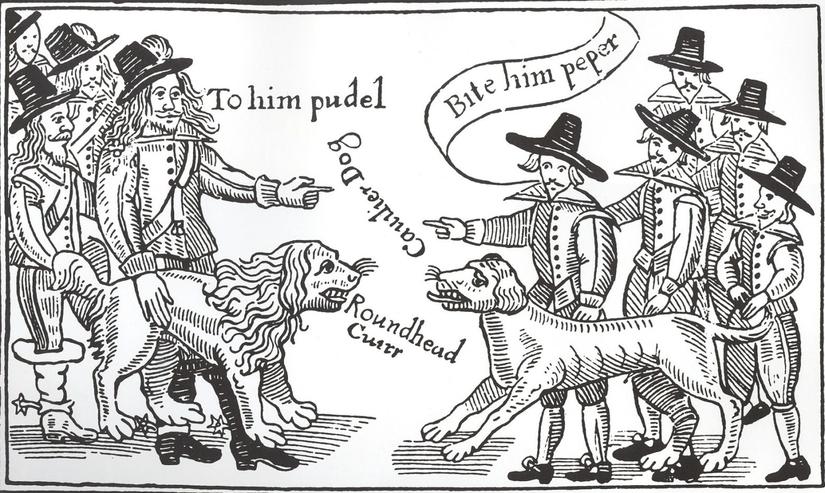
Although it was close to the royalist stronghold at Oxford, much of the area surrounding Banbury remained strongly in support of Parliament.
On the 21st of December 1642, the parliamentarian army of Northamptonshire attempted to take Banbury back, but they had to retreat as royalist reinforcements arrived from Oxford. However, in the spring of 1643 another opportunity was about to emerge.
A fateful fire
On the 3rd of May 1643, a fire broke out in Banbury. It appears to have started accidentally but raged for many hours, destroying around 100 buildings. The parliamentarian army of Northamptonshire decided to take advantage of the chaos and destruction, launching a new attempt to recapture the town.
On the 6th of May they gathered up their weapons and set out, joined by parliamentary cavalry from Buckinghamshire. However, the royalist Earl of Northampton found out about their plans and decided to make some of his own!
He set up camp with his troops and the Prince of Wales’ Regiment of Horse overlooking the Cherwell Valley, ready to meet the parliamentarian advance head on. This was a successful tactic as just the sight of them ready to defend Banbury had the parliamentarians calling for retreat. The royalists followed them and eventually the parliamentarians had to make a final stand - just south of the nearby village of Middleton Cheney. This royalist victory helped further secure supply chains to their stronghold in Oxford.
A military connection
In one of the far corners of our site, we’ve uncovered an enclosure along with multiple artefacts from the 1600s including the musket ball and military spur photographed below. These finds suggest this may have been an area where troops camped or travelled through.
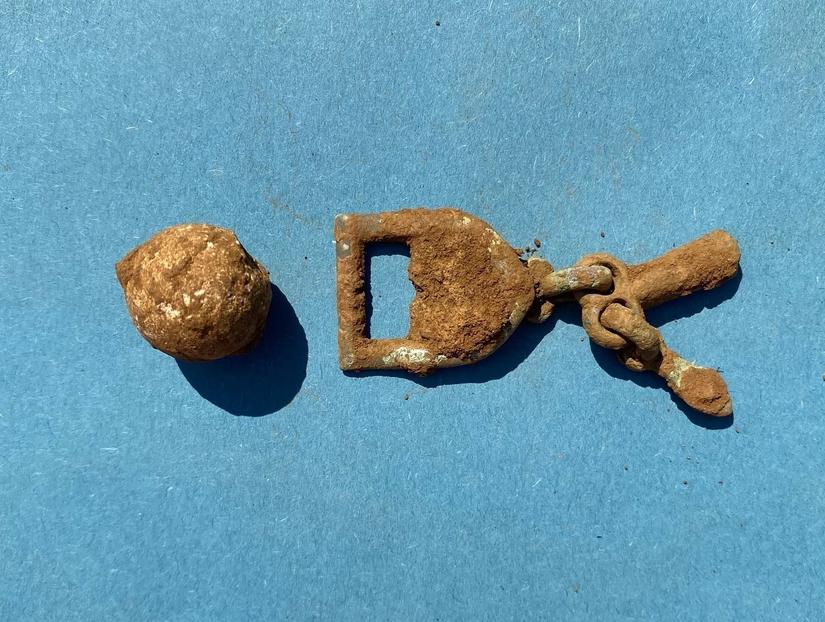
While we can’t know for sure if our site was used by soldiers during the Civil War, if we look at written records of the area, the evidence does potentially point towards a connection with the Battle of Middleton Cheney.
When the two opposing sides first met, it was by a ford along the River Cherwell. The parliamentarians decided to use this rather than the bridge at Banbury, which they believed would be heavily guarded. It is possible that this ford was at the base of the Cherwell Valley, in perfect view of our enclosure! There are even records which suggest there were footpaths leading to the ford - we believe those may be the same footpaths which lead from and around our site today.
So, did soldiers use our site to monitor the Battle of Middleton Cheney? Or could this enclosure have been a royalist shelter or store? For now these all remain questions and possibilities, but we look forward to exploring these possibilities with further research.