MOLA is carrying out excavations at Banbury for David Wilson Homes.
In our first blog we explored some of the most recent history of our site at Banbury and its potential role in the English Civil War. Now we’re headed back to the Bronze Age (2500-800 BC) to explore new discoveries, and some of the oldest archaeology on site.
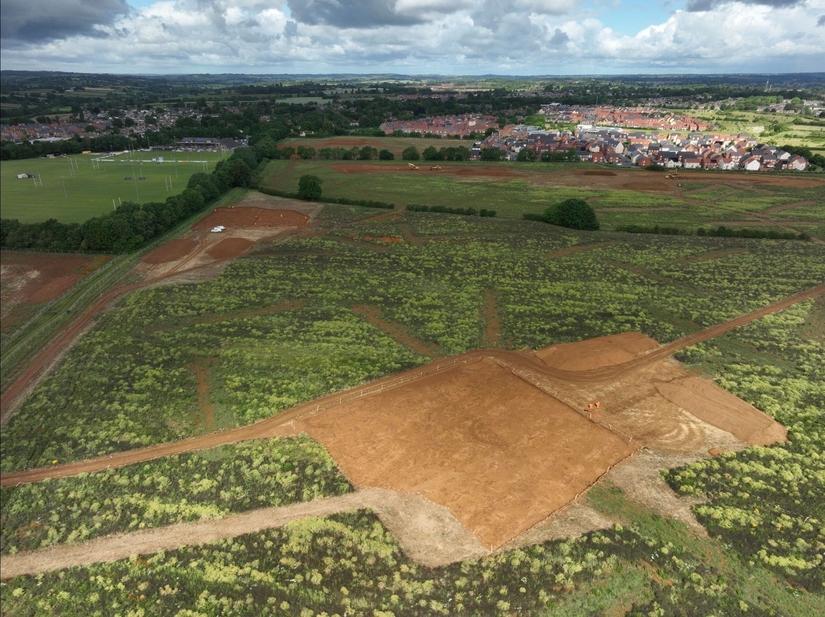
The Bronze Age was a big turning point in Britain’s past – for the first time metal replaced stone as the main material for making tools, new cultural ideas arrived from the continent, and at our site in Banbury we have our first potential evidence for farming.
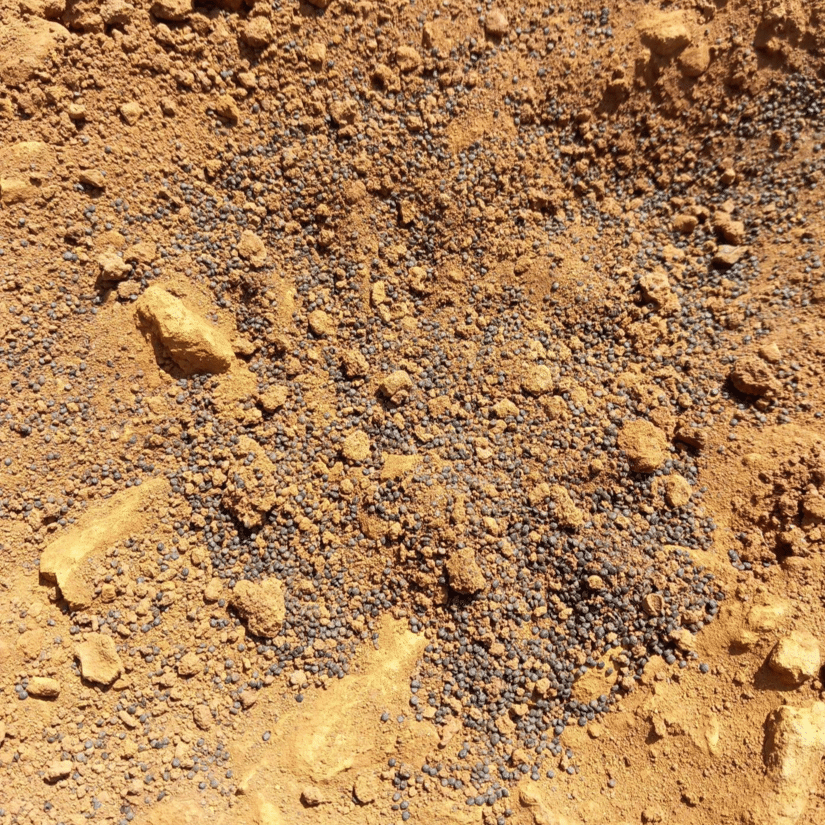
As well as evidence of Bronze Age field systems, we recently uncovered a very large amount of charred (burnt) seeds in a ditch. Based on our current evidence we believe the ditch is Bronze Age, although this could change as our work continues. It is unusual to find such a large collection of seeds like this, so we’re really excited for our archaeobotany specialists to tell us more about them. We hope to share more about this intriguing find after our post-excavation work.
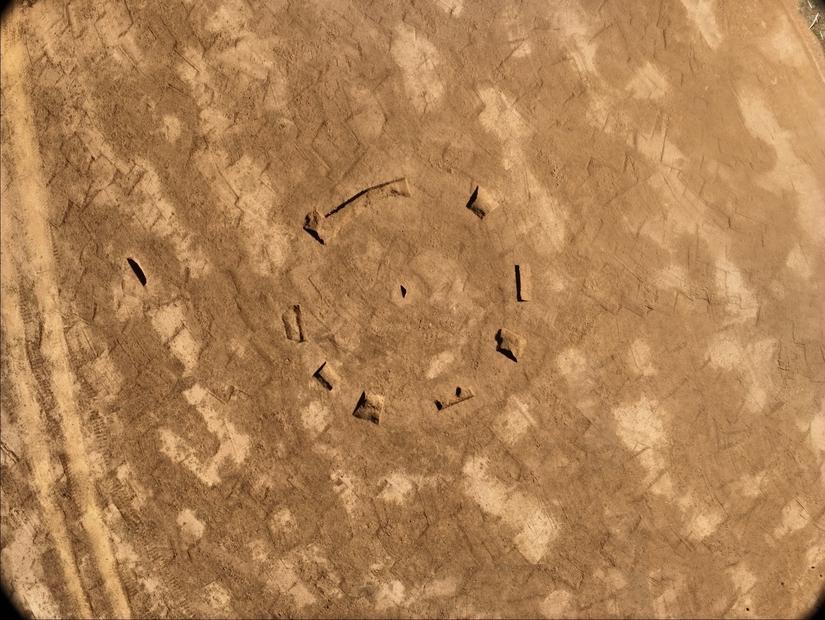
Farming has shaped our site for thousands of years, but it wasn’t the only type of activity taking place here. In the middle of one field were the remains of a long-lost Bronze Age round barrow.
Built between 2400 and 1100 BC, round barrows were impressive monuments made up of a central mound of earth, or sometimes stone, often surrounded by a ditch. Over time ploughing and farming has flattened our barrow’s central mound, leaving just the outline of the ditch.
Barrows are usually linked to burials, but all our evidence suggests there wasn’t one here. However, the barrow wasn’t completely empty. When we excavated the centre, we uncovered a pit full of burnt material and charcoal.
Finding organic material like this is exactly what we hope for as archaeologists. We can use radiocarbon dating to uncover a more exact time frame of when this barrow was built and used! This scientific technique measures the amount of carbon-14 in the remains of organic material such as plants and animal bones. The older they are, the lower the amount of carbon-14 they contain. A close examination of the contents can also help us build up a detailed picture of the surrounding ancient landscape, the trees and plants which grew nearby.
But the story doesn’t end there – and here’s where it gets exciting…
Before we excavated the barrow, our geophysics team re-surveyed it using their magnetometer. This equipment helps us detect buried archaeology features - like ditches and pits by measuring changes in the Earth’s magnetic field.
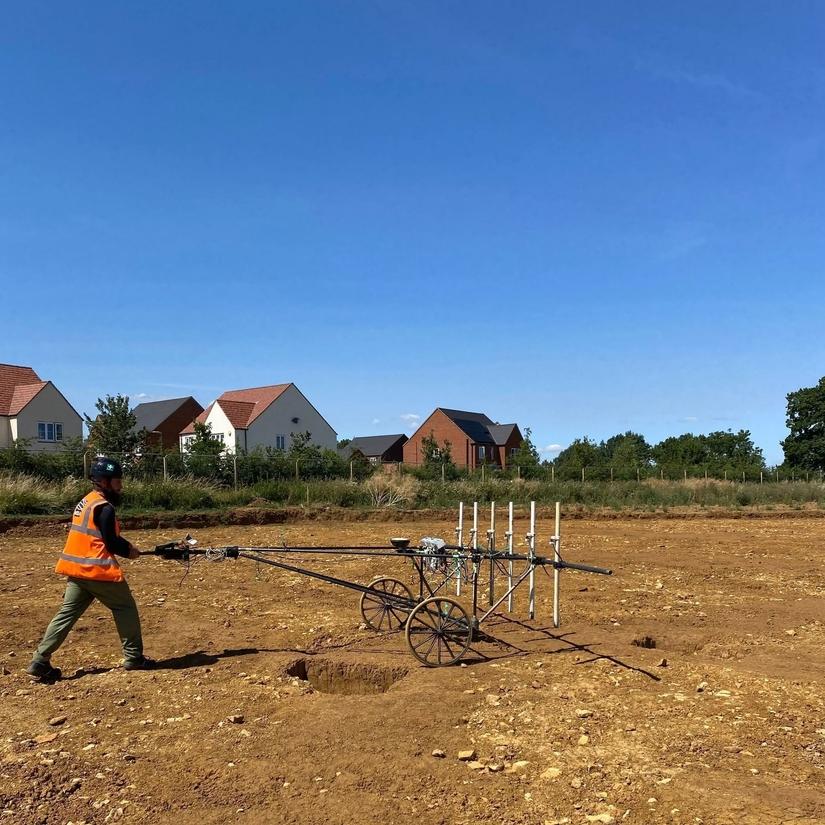
The results revealed something really exciting - three possible entranceways hidden beneath the barrow’s ditch. This is potential evidence for something even older than our barrow. We’re still investigating the possibilities, but it looks like it could be a hengiform monument.
Dating back even further to the Neolithic (4100-2500 BC) these were circular enclosures with a flat area inside, usually accessed by a couple of entranceways. Like larger henges (such as Avebury), they were often surrounded by a bank and ditch - just on a much smaller scale.
Just like religious buildings, memorials, and community centres today, prehistoric monuments were places where people could gather for ceremonies, celebrations, and other communal activities.
By building a barrow right on top of the older monument, the Bronze Age residents of our site weren’t trying to erase the past, they were connecting themselves to it. This was once part of an important local landscape – one which people remembered and returned to for hundreds of generations. Now, thousands of years later, we are rediscovering those connections lying right beneath our feet.