MOLA-Wessex Archaeology excavations in Suffolk have revealed new evidence of East Anglia’s ancient past, from beautifully preserved prehistoric stone tools to evidence of a local medieval pottery industry.
We've been carrying out excavations with our partners Wessex Archaeology on behalf of ScottishPower Renewables, ahead of the East Anglia TWO and ONE North development. Together we've uncovered an entire ancient landscape over an area of more than twenty-four hectares – the size of seventeen football pitches!
A long-lost Anglo-Saxon settlement
One of our most fascinating discoveries is the remains of a long-lost Anglo-Saxon (410-1066) settlement. Close to the modern village of Friston, which itself has early medieval origins, this site was home to a small community living in wooden longhouses. These weren’t just living spaces but also acted as social hubs, with a central hearth for cooking and keeping warm. Although the wooden buildings have long rotted away, the remains of post holes show they were substantial structures, up to nineteen metres long by six metres wide.
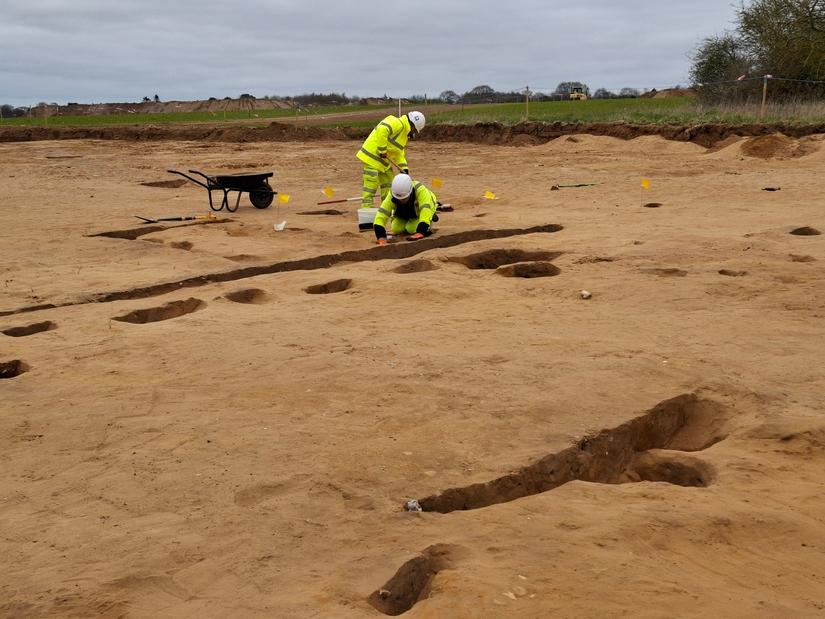
The settlement sadly did not survive beyond the 1300s, and our team will continue to study the finds in more detail – exploring when the village was occupied and why it was abandoned. Incredibly, however, one element of the village may have survived the passage of time. A modern public right of way is perfectly aligned with the early medieval buildings, suggesting the footpath has been in use since the Anglo-Saxon period – and possibly before.
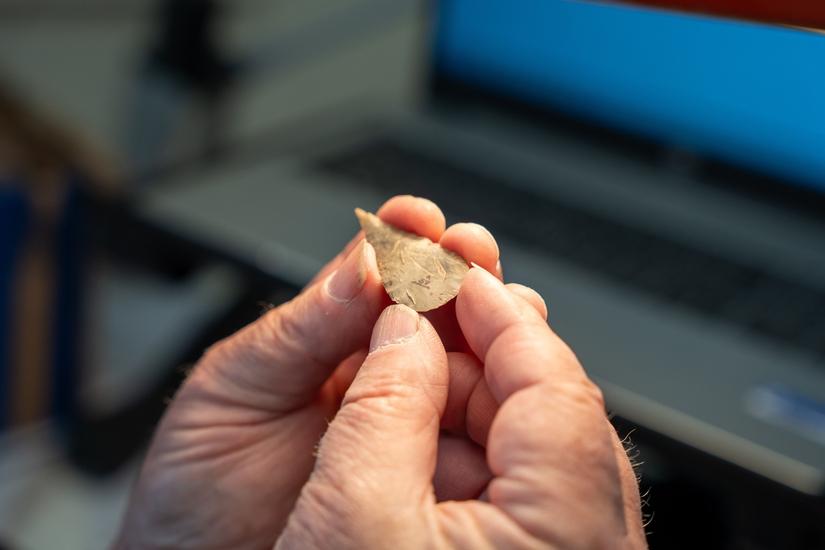
Other finds from across the scheme include evidence of Stone Age toolmaking, including a beautifully crafted axe head once used for woodworking, clearing land and possibly butchery. A particularly special find was a tiny but complete flint arrowhead made between 4000 – 6000 years ago. Designed to cover long distances for hunting, its sharpened edges and point are incredibly fragile and usually break in the ground, making this a rare find.
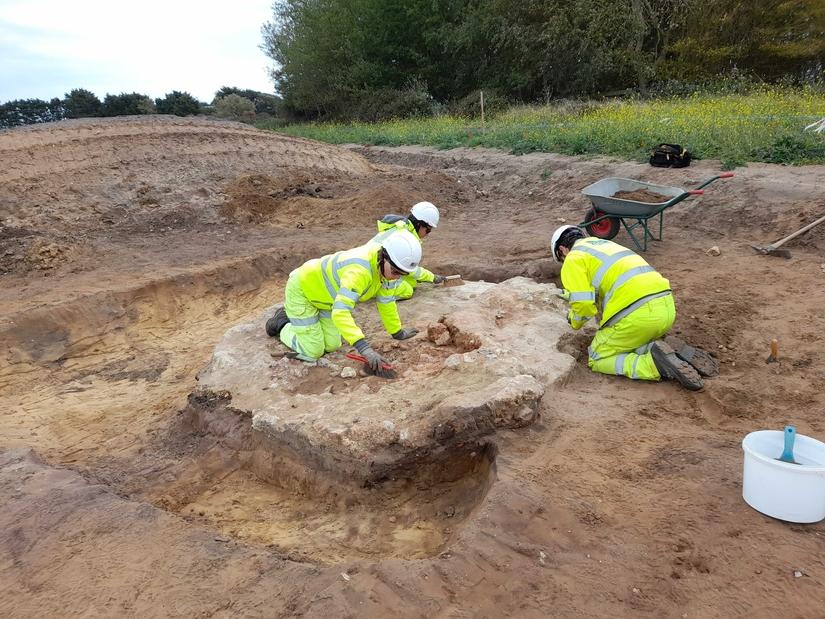
On the East Anglian coast near Sizewell, our team has also uncovered evidence for much later local industry in the form of medieval kilns, likely used to produce pottery, ceramics, or lime.
MOLA-Wessex Archaeology Senior Project Manager Matthew Ginnever said:
“The archaeological programme is already proving there is much to uncover about the history of East Anglia and its past populations.
These sites were always rural, but they were by no means isolated. We've discovered pottery associated with the ‘Beaker folk’, who lived across Europe in the early Bronze Age and brought new cultures and ideas to Britain. This suggests locals were in contact and trading with groups on the continent more than 3000 years ago.
We look forward to adding more details like this to the rich tapestry of East Anglia’s heritage as our work on the project continues.”
Michael Hotze, ScottishPower Renewables’ Project Execution Director for East Anglia TWO said:
“East Anglia TWO is about providing a cleaner, greener future for the region and the UK, but it’s doubly rewarding to be able to offer new insights into East Anglia’s history too.
“Preserving both the environment and heritage are a key part of our approach, and it’s great to see this ethos shared by the excellent teams at MOLA-Wessex Archaeology.”
Find out more
We'll be digging deeper into the discoveries and sharing more of our initial findings in a free online lunchtime webinar on Friday 23rd January 2026.
Archaeological work is being carried out by MOLA-Wessex Archaeology ahead of the East Anglia TWO and ONE North development by ScottishPower Renewables.