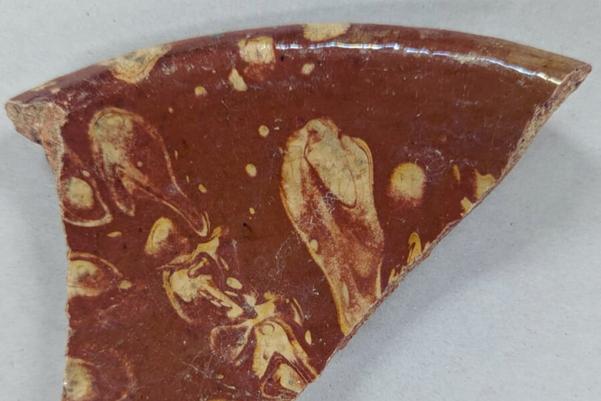
Decorative Italian pottery
Fragment of marbled slipware dish, Italy (1550-1700s)
We’ve been digging at SEGRO Park Wapping, ahead of development which will transform this site into the next generation of urban warehousing for Central London. As part of discharging pre-start planning conditions for the site, between September 2024 and May 2025 our team of archaeologists excavated and recorded a wide range of archaeology, and we’ve now submitted all the findings as part of our post excavation programme.
In our previous blogs we’ve explored the main periods of activity on the site. In this blog we’ll discover how the wider local area contributed to some of our most interesting finds – and what this tells us about the people who lived here in the past.
When we’re excavating a site, archaeologists also do a lot of research to understand what historic records can tell us about the archaeology we might find. This can also help us find out more about the people who once lived and worked here.
One historic document which tells us about the early days of our site - and life of Tudor Ratcliff - is John Stow’s Survey of London, published in 1598.
Stow accounts the founding of the school and alms houses which we uncovered. This happened while Stow was a young man – in fact, he records them as “the first building at Ratcliff in my youth”. But just before this description Stow gives us a taste of what else was happening around Wapping and Ratcliffe during this time…
From [the] precinct of St. Katherine to Wapping in the west, the usual place of execution for hanging of pirates and sea rovers, at the low-water mark, and there to remain, till three tides had overflowed them... but since the gallows being after removed farther off, a continual street...with alleys of small tenements, or cottages, [has been] built, inhabited by sailors’ victuallers
Stow also relates a story he had heard from more than 150 years earlier, where in 1440 a group of traders bringing fish “from beyond the seas” were attacked and killed by “sea thieves” while at anchor on the Thames at Radcliff. The thieves also sank the boats so there would be no evidence, although Stow tells us that two of them were later caught.
While we haven’t yet uncovered any direct connections between pirates and the people who lived on our site, we know there were lots of sailors and shipbuilders living nearby. The wife of notorious pirate and trader in enslaved African people, Henry Avery, is also said to have lived on Ratcliff Highway in the late 1600s.
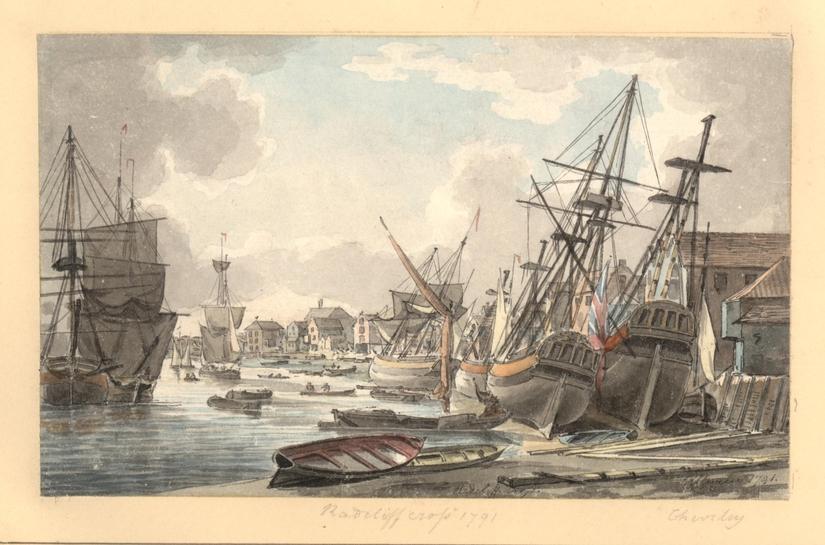
A view of Ratcliff in 1791 by Robert Cleveley © The Trustees of the British Museum. Shared under a Creative Commons Attribution-NonCommercial-ShareAlike 4.0 International (CC BY-NC-SA 4.0) licence.
In the 1700s and 1800s the area was known as Sailor town and was one of the busiest and most vibrant areas of London, it was home to workers from all aspects of the City’s international maritime trade. Sitting at the heart of London’s docklands meant people living close to our site in the 1500s-1800s had access to a wide variety of goods from across the world. Many locals were mariners, boat builders, or labourers at the dockyards.
London was at the centre of a global trade network, and we can see this in the range of imported pottery and porcelain we uncovered, including:
Fragment of marbled slipware dish, Italy (1550-1700s)
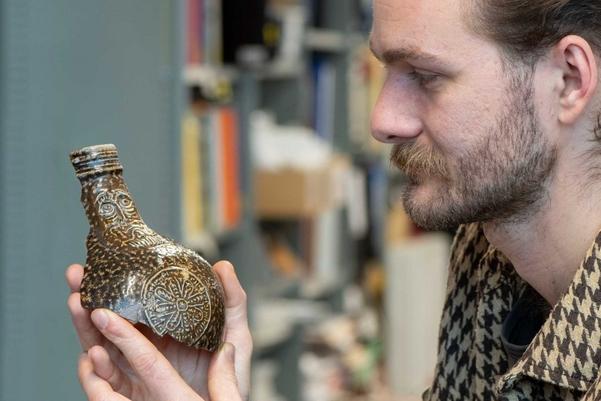
Remains of a Rhenish stoneware ‘Bartmann Jug’, Germany (1650-1700s)
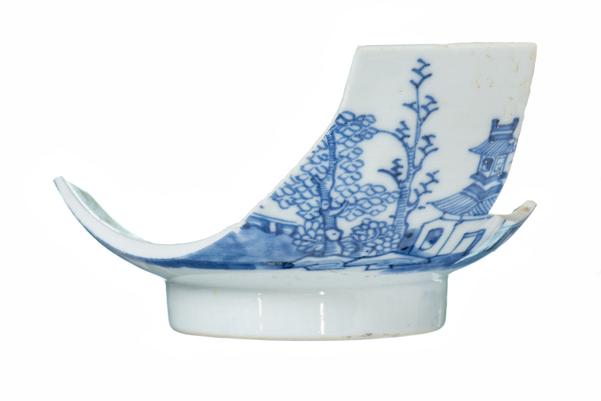
Remains of a rice bowl with blue decoration, China (1700-1800)
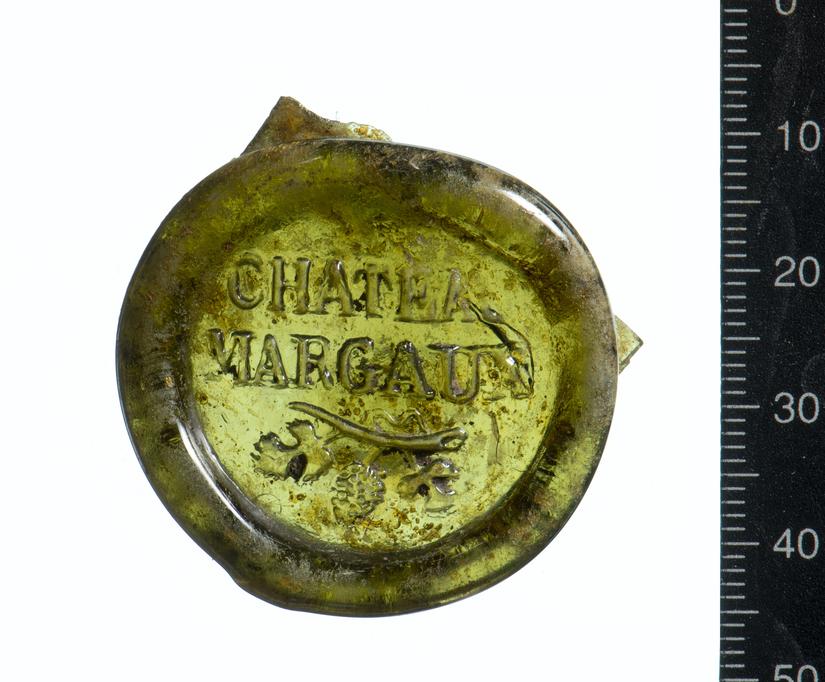
While excavating a cess pit full of pottery and glass from the early 1800s, we uncovered this wine bottle seal.
Stamped glass seals like this were added to in the 1600s and 1700s, at a time when glass bottles were still relatively expensive. The stamp could be the initials or name of the person who had bought the wine, the tavern it was sold in or, as in this case, the vineyard which produced it.
It comes from an imported bottle of Chateau Margaux - one of the most prestigious vineyards in Bordeaux (France). Bottles of this wine still sell for hundreds or thousands of pounds today!
In 1771 Chateau Margaux produced the first claret (a red wine from Bordeaux) sold at Christie's auction house. It was regularly ordered by the rich and famous, including British Prime Minister Sir Robert Walpole and US President Thomas Jefferson.
Finds like this, as well as expensive imported pottery and wine glasses suggests people from a wide range of social standings may have been living in the area and getting to enjoy some of the same luxuries as the richest in society.
The team are continuing their post-excavation analysis and study of the site and look forward to discovering even more about the people who lived, worked, and studied here.