We’ve been digging at SEGRO Park Wapping, ahead of development which will transform this site into the next generation of urban warehousing for Central London. As part of discharging pre-start planning conditions for the site, between September 2024 and May 2025 our team of archaeologists excavated and recorded a wide range of archaeology, and we’ve now submitted all the findings as part of our post excavation programme.
In our first blog we explored the main activity on the site, a school and alms houses in use from the 1500s to the late 1800s. In this blog we’re uncovering the site’s much earlier origins, as well as one of the darkest points in its history – the Ratcliffe fire.
Roman Ratcliff
Our site sits on the north side of The Highway – formally Ratcliff Highway – which may follow the route of a Roman road. Based on findings from evaluation work on the site, we expected to find evidence of agriculture and some Roman pottery. While we found some at the southern end of the site, we also uncovered the remains of a single building.
Most of the stone from the building had been robbed out, likely in the late Roman or early medieval period. However, we did find the remains of some walls built with Kentish ragstone, as well as areas of floors made from tesserae (small mosaic tiles).
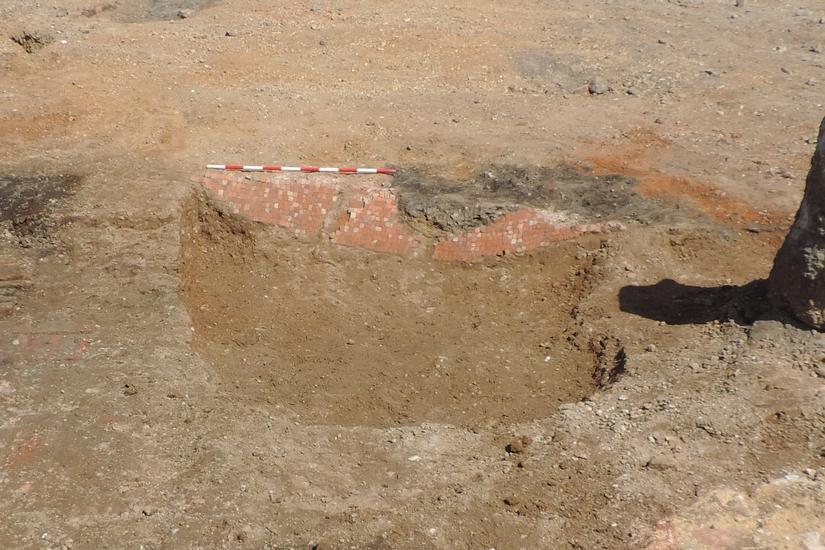
We also discovered a Roman well lined with a cask (barrel) made from silver fir, which was likely originally used to transport wine. This is the only Roman cask to be found in London outside the city walls and north of the river!
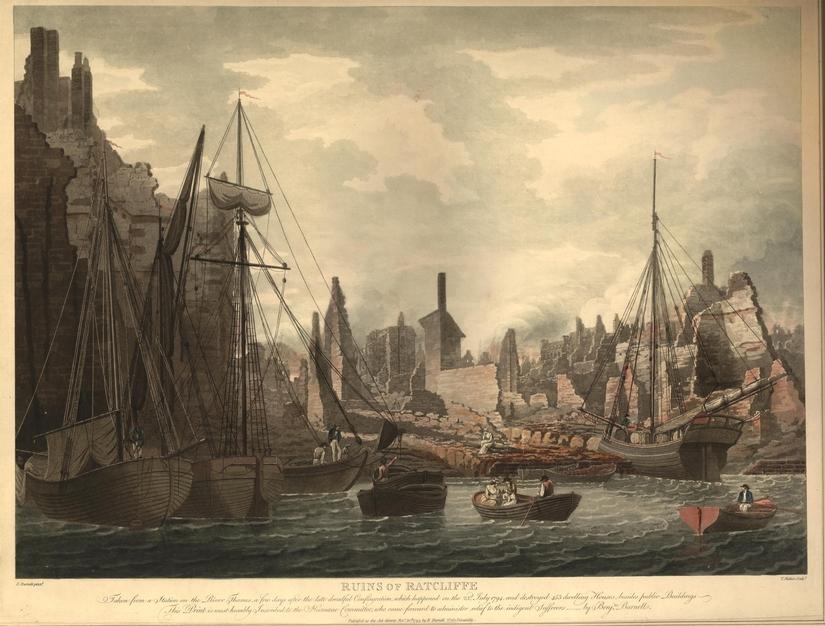
Ruins of Radcliff by Benjamin Burnell, © The Trustees of the British Museum. Shared under a Creative Commons Attribution-NonCommercial-ShareAlike 4.0 International (CC BY-NC-SA 4.0) licence.
A contemporary map of the fire shows the school and alms houses were right in the centre of the flames, and we discovered a row of brick cellars covered with soot –perhaps evidence of that fateful day.
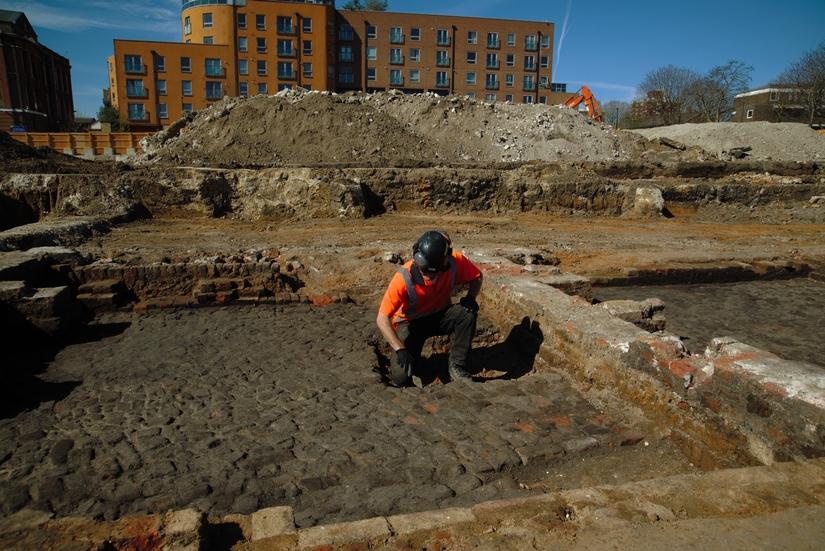
Records and our excavations show the school and alms houses were rebuilt just north of their original location, along with a chapel on the east side of the large central courtyard. The chapel was used for services for the residents and for giving out end-of-term results and prizes for the school.
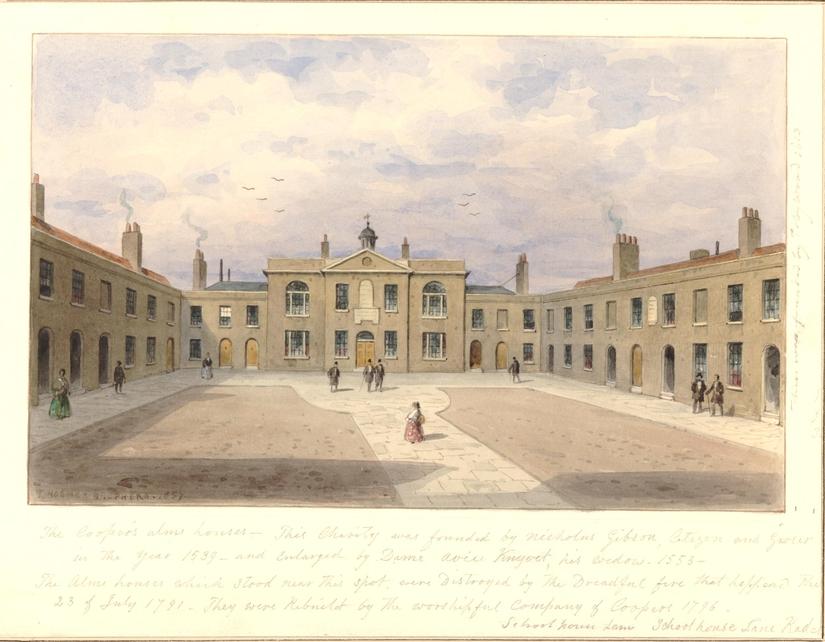
View of the Coopers' alms houses on Schoolhouse Lane, Ratcliff by Thomas Hosmer Shepherd © The Trustees of the British Museum. Shared under a Creative Commons Attribution-NonCommercial-ShareAlike 4.0 International (CC BY-NC-SA 4.0) licence.

